Usability and User Experience build good products that are functional and easy to use. Brand Experience builds great products that are memorable and delightful. We cover both, powering digital products with great functionality and memorability.
Usability and User Experience
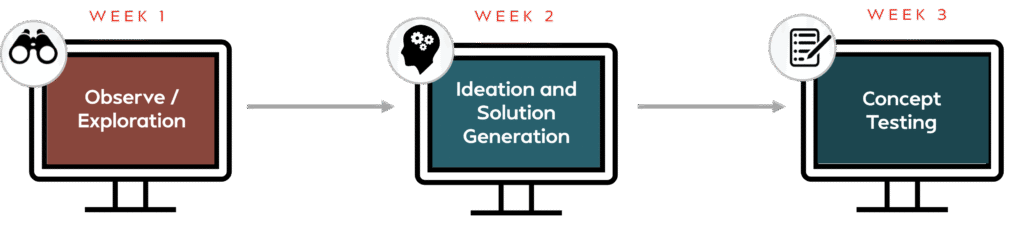
We observe users completing tasks naturally, capturing screen activity, eye movements, and biometrics. We then probe areas of confusion through replays and interviews. This unobtrusive method combines behavioral data with surveys and qualitative insights to provide a rich and accurate picture of the user experience.
Information Architecture & Design
We evaluate how content is organized, labeled, and navigated on your site. Using methods such as card sorting, tree testing, and first-click analysis, we identify navigation issues, optimize structure, and ensure users easily find what they need – boosting clarity, efficiency, and engagement.
Content Strategy
We evaluate whether your content feels fresh, clear, relevant, and credible. Using lab-based methods, we test comprehension, emotional tone, and trust signals while optimizing structure and language to match user intent. The result: content that informs, resonates, and elevates your brand’s authority and impact.
BX: Brand Experience Research
BX adds strategic brand depth to digital products by layering emotional, aesthetic, and symbolic elements onto core functionality. It transforms usable experiences into memorable ones—building stronger user-brand relationships, enhancing differentiation, and turning every interaction into an expression of your brand’s identity.
BXdesignTM: Digital Brand Strategy
BXdesign™ is a digital brand strategy research offering that integrates behavioral insight, emotional design, and strategic brand architecture to build distinctive, memorable brands in the digital age. It combines brand strategy with cutting-edge brand experience architecture to ensure both clarity and resonance across platforms.
What Do You Get?
A usability and UX report based on realistic user tasks and capturing both conscious and unconscious behaviors.
End-to-end research to optimize information architecture and content strategy.
A structured approach and strategy for creating digital brands that foster loyalty, deepen relationships, and drive repeat engagement.
RESEARCH METHOD.
Usability Testing
Good UX is invisible. Users only notice when it fails. A button that does not respond as expected. A search function that delivers irrelevant results. A checkout flow that feels like unnecessary effort. These are the moments where engagement breaks.
Usability testing identifies these friction points through structured analysis:
Click Tracking & Drop-Off Analysis – Mapping where users engage, hesitate, or abandon tasks.
Eye-Tracking & Heatmaps– Measuring attention flow and identifying overlooked elements.
Task-Based Testing– Assessing whether users can complete key actions without confusion.
In healthcare, this means reducing complexity in patient portals and appointment scheduling. In retail, it ensures navigation feels intuitive. In digital products, it validates that every interaction is clear from the start.
The process is iterative—clutter is removed, unnecessary steps are stripped away, and essential functions are optimized.
Cost Estimator for an Insurance Company
Weblab was used to improve the cost tool that increased the usage by insurance members.
How is BX/UI/UX research conducted at Weblab?
Simulate Natural Conditions.
Authentic research requires authentic testing conditions. We regularly “stage” environments in which authentic testing can take place. We also spend a lot of time and energy in perfecting the task conditions and instructions to be given during the UX / CX testing sessions.
Observe Without Interruptions.
Traditional UX research is conducted in a very obtrusive manner. Not so at the Weblab. We leave the consumer alone to do the tasks while everything is being recorded using Eye Trackers or powerful software that captures the screen and keystrokes.
Measure to Avoid Bias.
We are experts in quantitative and qualitative research. So, we know only too well that qualitative data can exaggerate noncritical information. We, therefore, administer a scientifically created survey right after the consumer ends his session with the interface.
Replay and Conduct Interview.
After the respondent completes the given tasks, an expert consumer researcher replays the recording of the Eye Tracker session. The researcher goes frame by frame, asking questions and probing UX related themes as well as conducting a deep qualitative interview.
METHOD.
Eye Tracking Research
Ever wondered why some websites just feel right? The secret lies in understanding where users look, what grabs their attention, and what they overlook. Eye-tracking studies decode these patterns by monitoring eye movements across the screen.
Traditional research methods can be intrusive, altering natural behavior. In contrast, eye-tracking technology allows users to navigate digital spaces naturally. Specialized sensors discreetly track where and how long users focus, capturing genuine interactions without interruption.
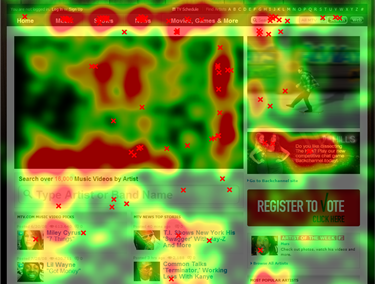
The collected data transforms into visual maps, highlighting hotspots of attention and areas of neglect. These insights empower designers to craft digital experiences that are intuitive, engaging, and user-centric. By seeing through the user’s eyes, we move beyond guesswork, creating seamless interfaces that resonate on a human level.
EYE TRACKING HEAT MAP
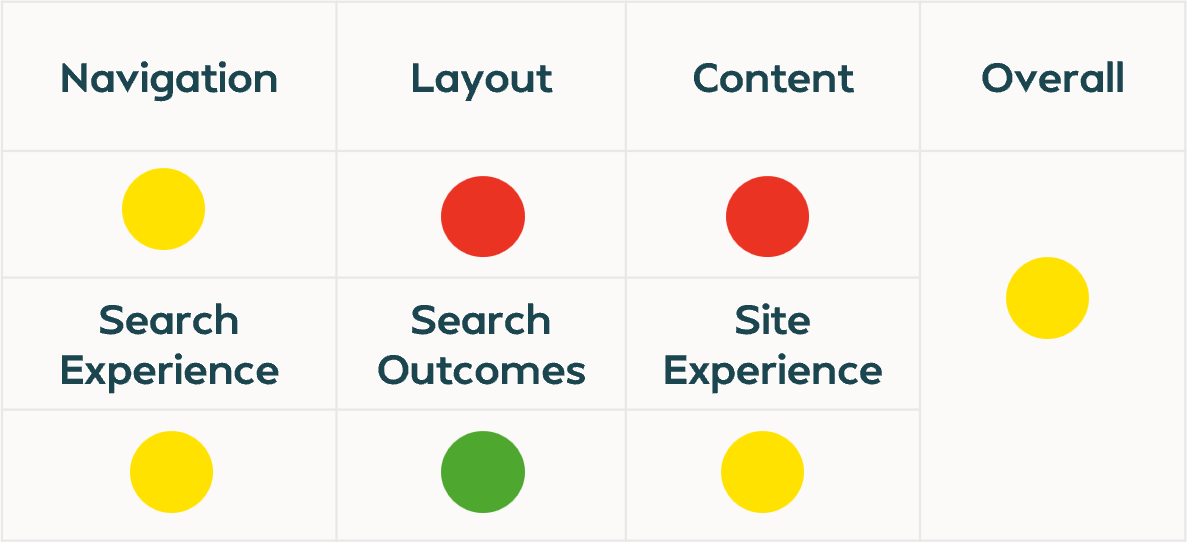
SITE RATINGS
Design
☹️
Clutter
"Cluttered, too much to look at, too much visual pictures/diagrams"
"Very cluttered, difficult to see content."
Search
☹️
Confusing
"Could not find what I was looking for!"
"Image menu was hard to manage with the content so close together."
☹️
Too many clicks
"You had to click, click, click (to get info)"
"You must hover over each for minimal info, once clicked, more was displayed."
😊
Related Content
"Really liked the ability to pull other content."
Brand Experience Research
What’s in a Name?
From a marketing perspective, a term or phrase need not just have a literal meaning. Words evoke imageries, feelings, and thoughts.
Words or phrases do not always need to have a literal meaning. Abstract ideas are always difficult to express in literal terms and must rely on imageries and feelings to communicate. For example, it is challenging to define even a simple word like “love”. It is better understood as a feeling or through the images it evokes. The word “love” is also contextual and takes its meaning from the context in which it is used. To understand a brand name, therefore, we must understand the thoughts, images, and feelings it evokes in the context of the product category.
Brand Meaning: Qualitative Research Design
Homework Visual Imagery
Respondents are asked to collect 10-12 images that represent the brand concept as homework. When they come to the lab, each respondent presents their pictures to the triad group and explains their understanding of the brand concept.
Exploration Thoughts and
Feelings
The moderator guides the conversation to explore thoughts and feelings, focusing on the brand concept. The focus is on understanding all the facets of the brand concept – imageries, thoughts, and emotions in various contexts.
Experiential Meaning in Context
The focus then shifts to understanding the meaning in the context of actual use experience. What aspects of the brand’s use communicate the brand concept? How do we make it operational?
Value
Creation and
Capture
Respondents are asked to collect 10-12 images that represent the brand concept as homework. When they come to the lab, each respondent presents their pictures to the triad group and explains their understanding of the brand concept.
CASE STUDY.
Developing a Brand Concept in Healthcare
A Health System wanted to design a consumer app to help patients find physicians. The physician finder tool/app must offer four key benefits:
Differentiation and brand strength
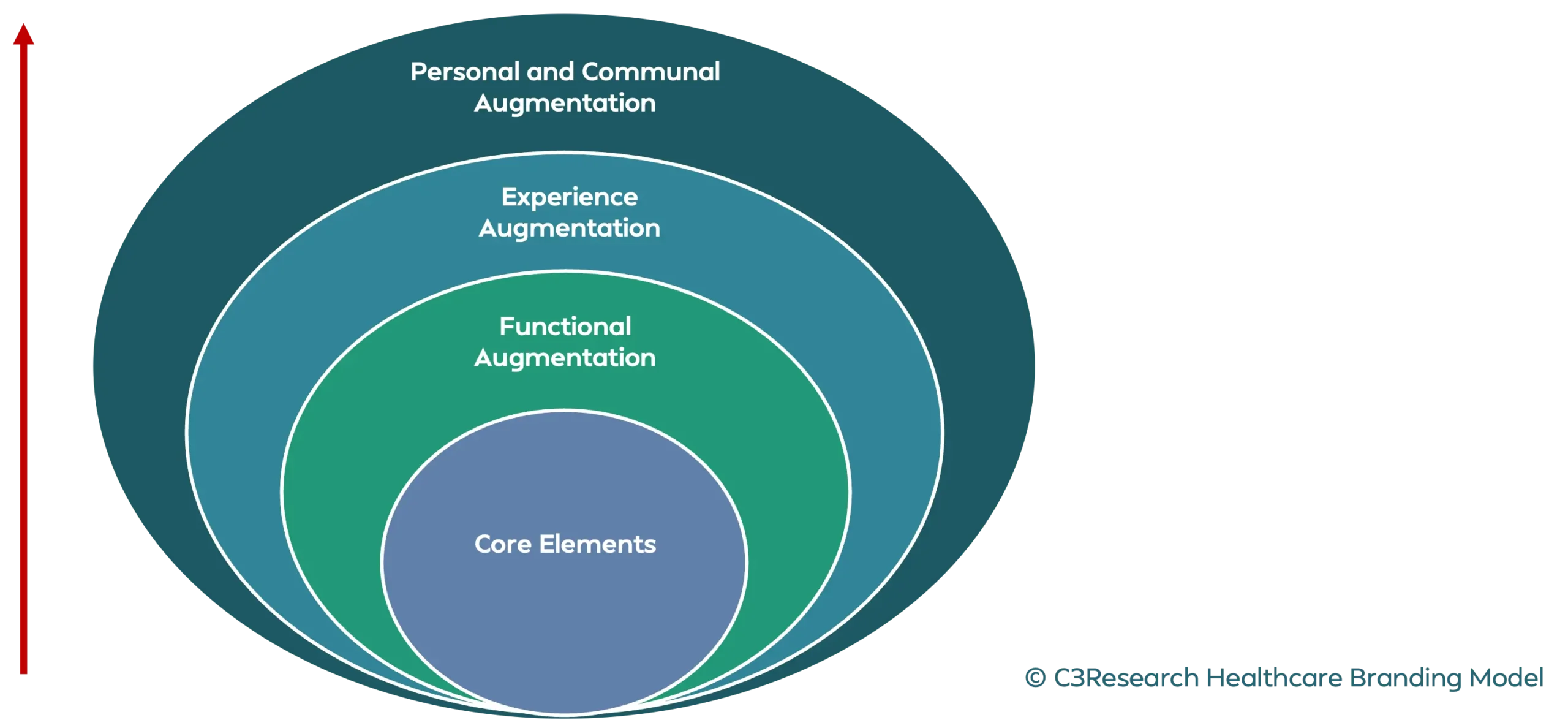
Core Elements
Core elements such as quality of care and range of services available provide limited scope for differentiation.
Functional Augmentation
Better amenities, modern infrastructure, and shorter wait times provide the next level of differentiation.
Experience Augmentation
Providing seamless and positive experience in navigating healthcare, building consumer relationships, shifting focus to managing health rather than treating sickness
Personal and Community Augmentation
Building deep ties with the local community. Nurturing personal experiences. Embedding the brand in the community as an Institution.
Digital Brand Strategy
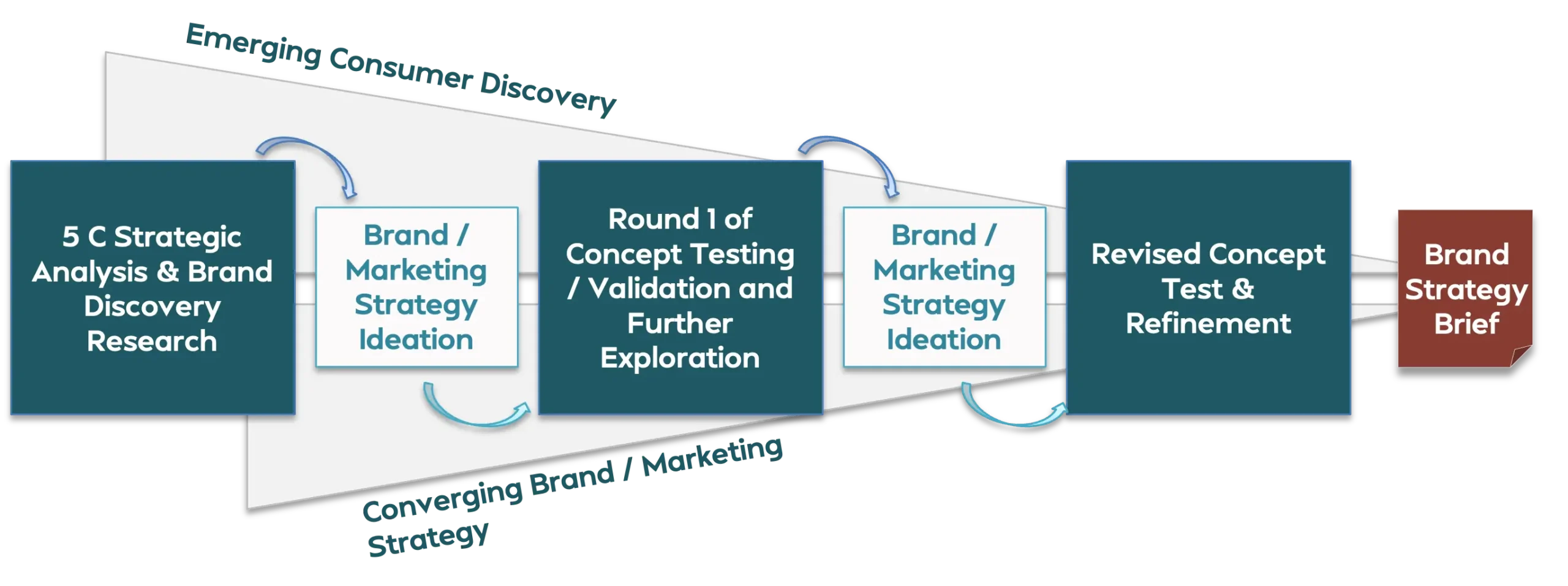
Brand strategy development is a systematic and disciplined creative research methodology that combines fact-finding research with creative ideation and strategy building in an iterative process.
The concept of emergent research design guides the process: as the research progresses, we revise and update our strategy ideas, as well as the research guide and techniques used in the next phase of research and ideation.
At the end of the process, the research findings should converge on clear directions for developing a Brand / Marketing Strategy brief.
CONCEPTUAL MODEL.
Consumer Brand Models
Leading consumer-based brand equity models from academia and commercially available brand trackers:
Consumer-based Brand Models in Academia
Researchers like David Aaker, Kevin Keller, Don Lehman, Susan Fournier have focused on the following constructs:
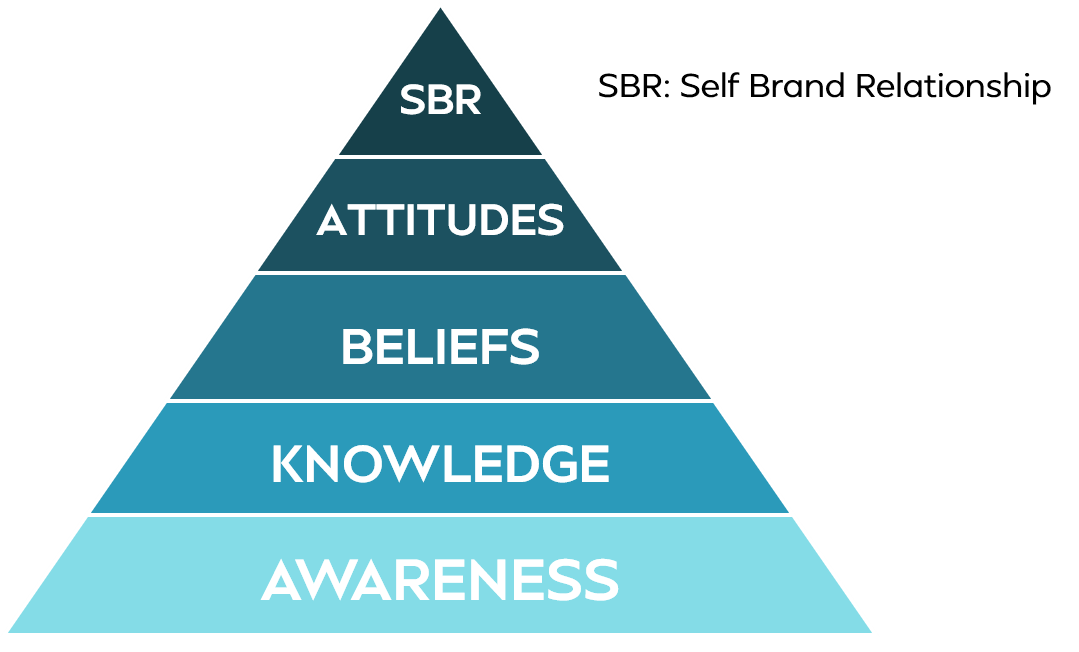
Awareness
Associations (Brand Imageries, Beliefs)
Attitudes
Attachment (Brand Affinity or Loyalty)
Action (Intention to buy, Recommend)
Commercially Available Brand Trackers
There are several commercially available brand trackers that primarily focus on brand valuation based on critical brand and competitive metrics:
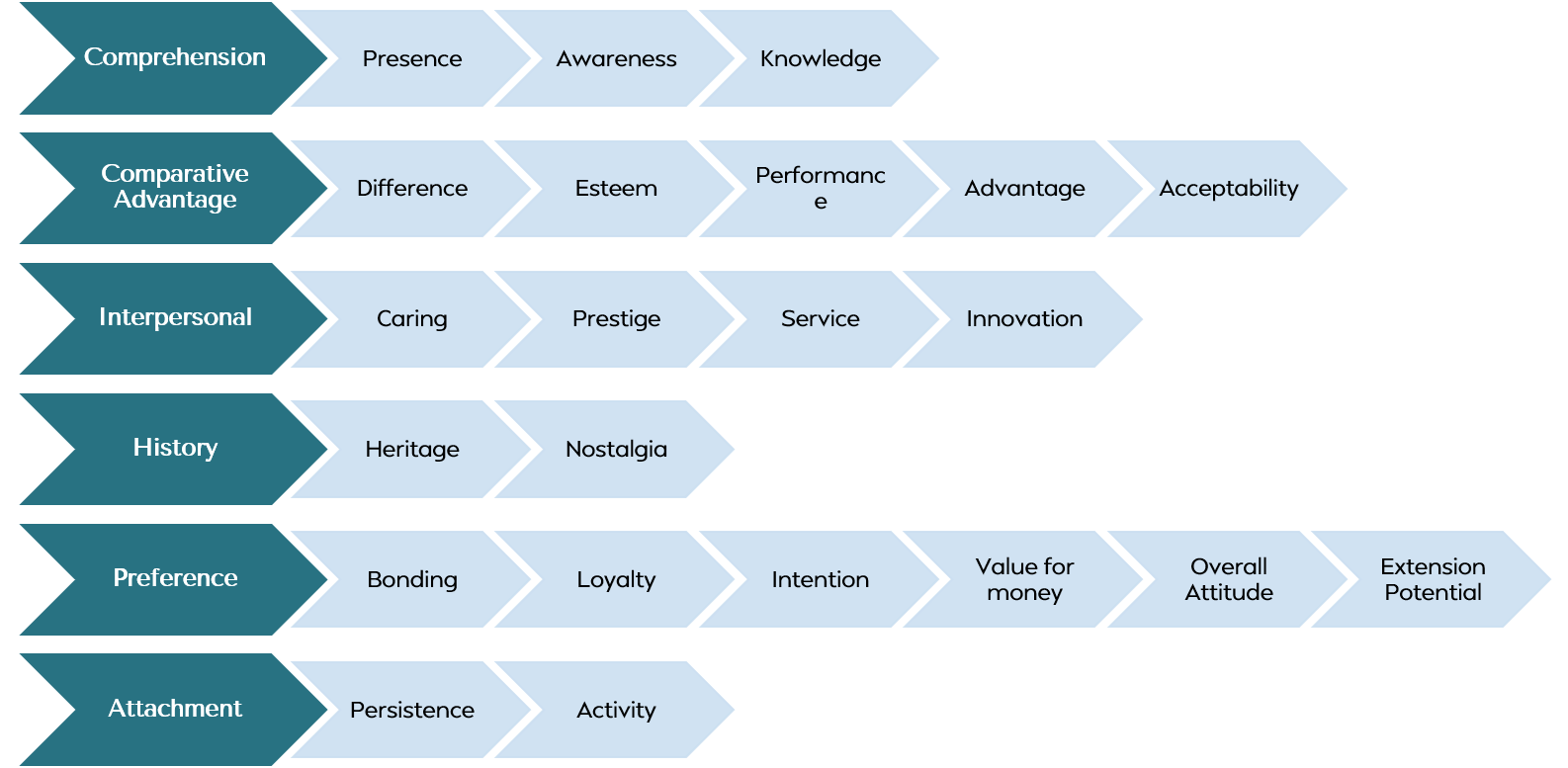
Young and Rubicam Brand Asset Valuator: Relevance, Differentiation, Esteem, Knowledge
Millward Brown BrandZ Pyramid with Presence, Relevance, Performance, Advantage, Bonding
Research International Equity Engine’s structural model involving five constructs: authority, identification, approval, attitude, and performance.
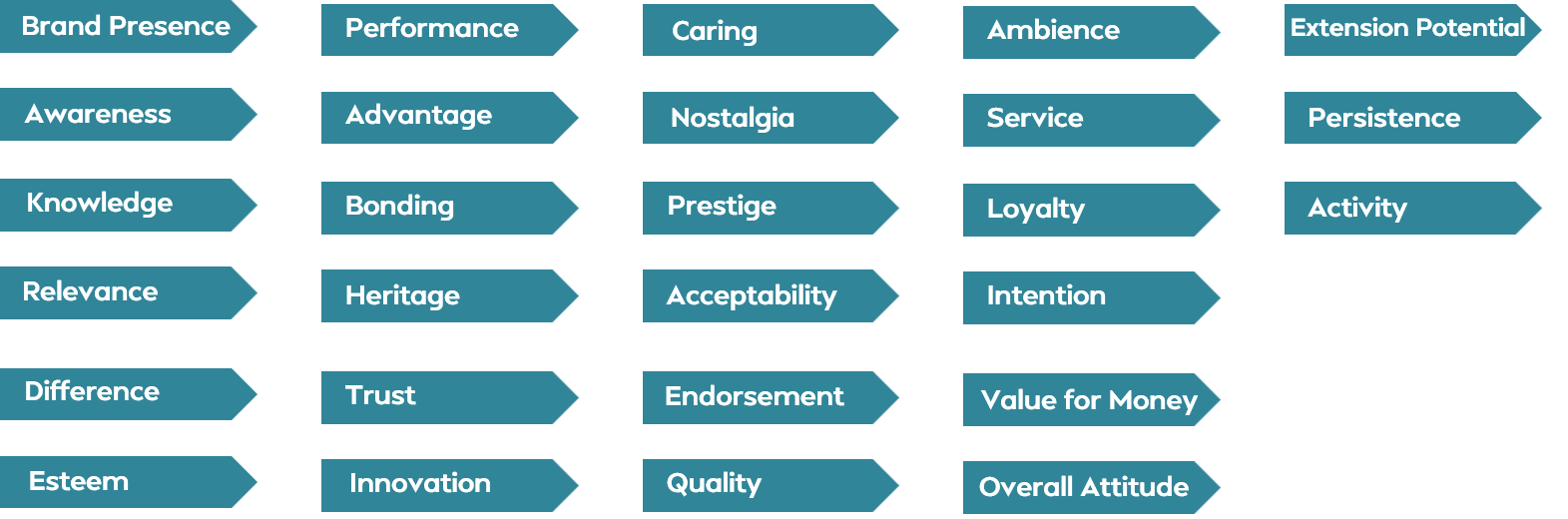
27 constructs were summarized in a leading academic paper from the brand models shown.
The 27 constructs were reduced to six dimensions through statistical analysis of data collected from two surveys conducted in the US and China.
The psychological bases for consumer brand strength:
CASE STUDY.
An Iconic Women’s Magazine Brand
What people say and what they do in the digital world is never the same. It is not because people are not truthful. It is simply because they do not have good insights into their own subconscious behaviors.
How do women engage with the brand’s website?Is there a difference between what they say about the brand and what they experience and do on the site?
We observed their interaction with the site using eye tracking, measured their engagement with galvanic skin conductance sensors, and analyzed their facial expressions using facial expression analysis software. We also included competitive brands and social media sites in the mix to get a good understanding of the digital life of the target segment.
Target Segments
Generation Z
18-24 Years Women
Generation Y
25-40 Years Women
Generation X
41-56 Years Women
Study Design
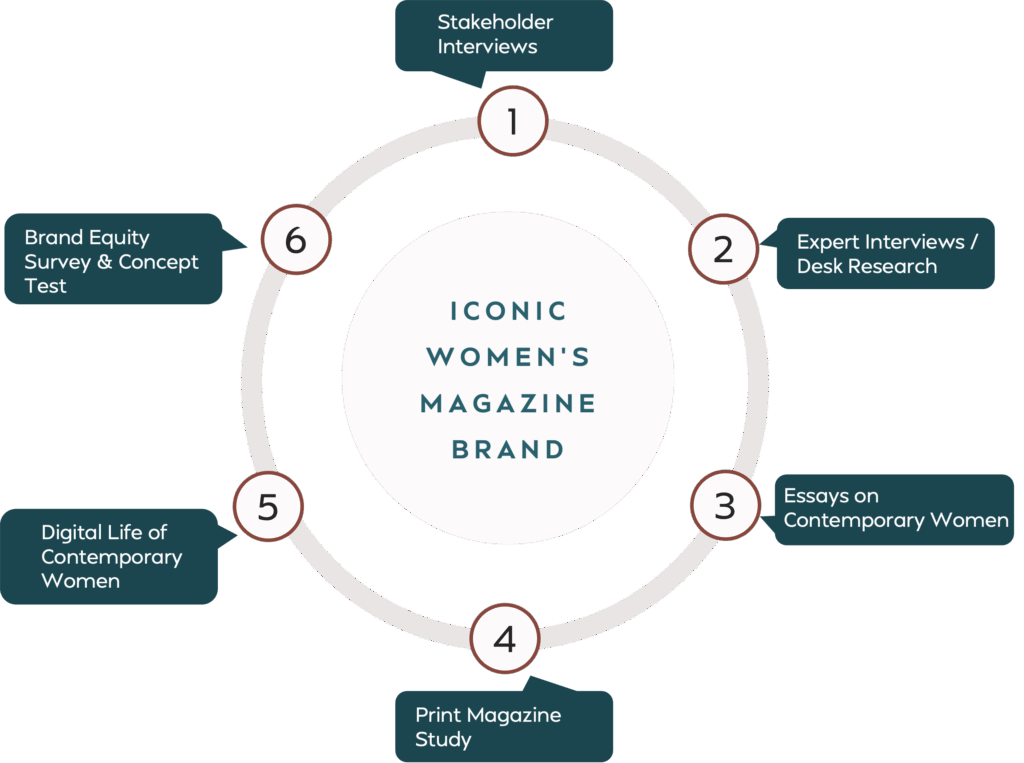
The study designs with stakeholder interviews to gather insider perspectives, followed by expert interviews and desk research for industry insights. Next, essays on contemporary women provide a cultural lens, while a print magazine study examines traditional media engagement. The digital life of contemporary women phase investigates online behaviors, culminating in a brand equity survey and concept test to assess perception and future potential.
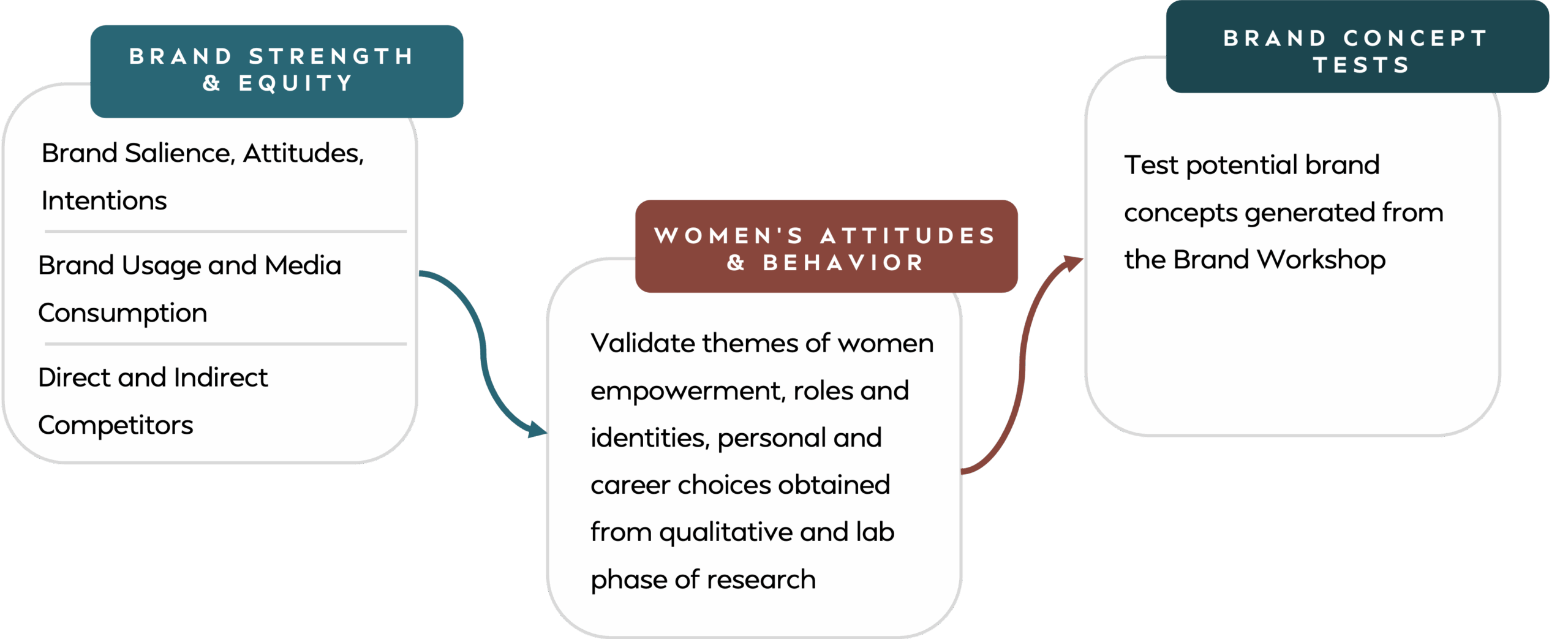
Brand Equity & Concept Test.
We’d love to hear from you!
Please enter your contact details if you want to know how we can help your business through strategic research, UX/UI design, or brand innovation.



 Usability and User Experience
 Information Architecture & Design
 Content Strategy
 BX: Brand Experience Research
 BXdesignTM: Digital Brand Strategy