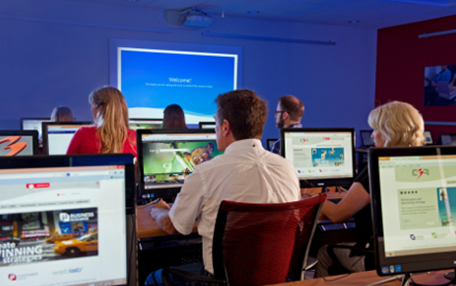


E-Consumer Behavior & Omnichannel

What we do?

Online behavior differs from offline decision-making. We study how users process digital information, form impressions, and make choices in digital environments. These insights are essential for designing websites, e-commerce platforms, and apps.

Consumer Needs and Motives

Why do users visit your website or app, and what are they seeking to accomplish? Through lab-based testing, observational research, and in-depth interviews, we uncover core needs, emotional drivers, and behavioral motivations to inform more purposeful and user-centered digital experiences.

User Interaction Experience

We simulate real-world digital tasks to observe how consumers shift between active and passive processing. By analyzing conscious and unconscious behaviors, we uncover what drives engagement or causes friction, enabling us to design intuitive, goal-aligned experiences that enhance usability, flow, and conversion.

Consumer Journey Mapping

We trace the full consumer journey—from initial need triggers to category exploration and on-site behavior—using qualitative research and lab experiments. By uncovering underlying motivations and desired outcomes, we turn fragmented steps into a cohesive, insight-rich path that informs experience design and conversion strategy.

Omnichannel Lab

We study how consumers research, shop, and switch across digital and physical touchpoints. By blending observation, interviews, and surveys, we uncover patterns in omnichannel behavior, revealing insights that help brands design seamless, integrated experiences and more effective cross-channel strategies.

Path to Conversion

Conversion is rarely a single click—it’s a multi-step journey shaped by both conscious and unconscious decisions. We map this journey, identify points of friction, and design behavioral nudges that guide users—whether to purchase, sign up, or engage meaningfully—with your digital experience.

What do you get?

  • Rich behavioral insights that are not possible to obtain through traditional methods.
  • Consumer Journeys that drive engagement, conversion, and digital performance.
  • Develop powerful omnichannel strategies based on consumer learning, cross-channel shopping and online fulfillment behaviors.

Understanding the e-Consumer

In today’s hyper-connected world, digital consumers behave in ways that are fundamentally different from those in physical environments. Their decisions are shaped by rapid information flows, multi-screen habits, and both conscious and unconscious interactions with digital stimuli.

At Weblab, we specialize in decoding these unique behavioral patterns. Our e-Consumer Behavior Analysis gives you actionable insights into your audience’s needs, motives, and engagement styles online. By blending behavioral science with advanced experimental methods, we help you design digital products and experiences that resonate deeply—driving attention, interaction, and loyalty.

By tapping into real behavior, motivations, and unmet needs, businesses can move from guessing to knowing—shaping products, services, and messages that truly resonate with their targeted digital audiences. Whether you’re launching something new or refining what exists, great e-consumer research helps you see through the eyes of your audience, anticipate trends, and make smarter decisions that fuel growth.

Inside the e-Consumer Lab

Consumer Needs, Motives and Gratifications Research

Identify the psychological and emotional gratifications that users seek online. Understand how digital platforms satisfy, or frustrate, these needs in ways that differ from physical environments. We analyze patterns across behavioral flows to design experiences which align with real user intent. 

Consumer Segmentation Models

Move beyond static demographic buckets – we segment your audiences by their information processing styles, task orientations, and decision-making patterns to create dynamic models for targeting and personalization.

Digital Experience Lab Experiments

In our experimental research, we simulate key user journeys to uncover friction points and moments of delight. Using eye tracking, biometric data, and behavioral observation, we evaluate how users navigate and respond to your digital stimuli.

Information Processing & Attention Mapping

Discover how users consciously and unconsciously process information online. By analyzing cognitive load, attention flows, and engagement triggers, we help design journeys that feel effortless and intuitive. We help uncover dynamic flow states that keep users immerse, or disengaged.

Our Methods

To decode digital behavior, we combine behavioral science with experimental precision. Every insight comes from rigorous testing, measured observation, and advanced analytics that move beyond self-reported data.

We design research environments that simulate real-world digital interactions, allowing us to uncover how consumers actually think, feel, and behave online.

Here’s how:

Behavioral Lab Experiments

Controlled, immersive simulations to test how users interact with your digital products in real-time. We observe both conscious and non-conscious responses to digital stimuli.

  • Eye tracking for attention flow mapping
  • Biometrics to measure emotional responses and engagement levels
  • Task-based experiments to evaluate usability, decision-making, and cognitive load

Survey Research

Quantitative studies at scale to uncover patterns in consumer preferences, needs, and segment-level differences. Our surveys are designed to test hypotheses and validate behavioral insights from our lab.

  • Dynamic segmentation models
  • Active vs passive information processing profiles

In-Depth Qualitative Interviews

We dive deep into user motivations, needs, and pain points to understand the “why” behind behavior. Our moderated sessions reveal insights that traditional surveys often miss.

  • Cognitive walkthroughs of digital journeys
  • Think-aloud protocols and post-task reflections

Your Insights Toolkit

Every engagement produces a set of clear, actionable outputs designed to help your teams translate behavioral insights into better digital products and experiences.

    • Behavioral Insights Report
      A synthesis of conscious and non-conscious user behaviors, highlighting key patterns in needs, motivations, and engagement styles. Actionable recommendations for refining design, messaging, and interaction flows based on lab-tested insights.

    • Dynamic Segmentation Models
      User groups mapped by cognitive styles, information processing behaviors, and task orientations—beyond static demographics.

    • Cognitive Journey Maps
      Visual maps showing how users attend to, navigate, and process information across your digital ecosystem.

    • Attention Heatmaps
      Eye tracking and biometric data visualizations that reveal where users focus, pause, and disengage.

    • Engagement Dashboards
      Interactive dashboards to monitor task flow, cognitive load, and dynamic user engagement in real time.

    • Stakeholder Workshop
      A collaborative session to align teams on findings and co-create a roadmap for implementation.

CASE STUDY.

How to Transfer Brand Equity –
From Print to Digital

An iconic women’s magazine faced declining print sales.  The digital version never took off. The challenge was to transfer the equity and immersive qualities of the print media to the digital channels.

A: Past User

No longer in the age segment or leaving print

B: Print User

Strong brand user but in a declining category

C: Digital Subscriber

Extremely competitive media landscape and faces challenges to grow

D: Digital Visitor

Unlikely to have loyalty and not willing to pay for content

E: Social Media Aware

Limited awareness of the brand persona
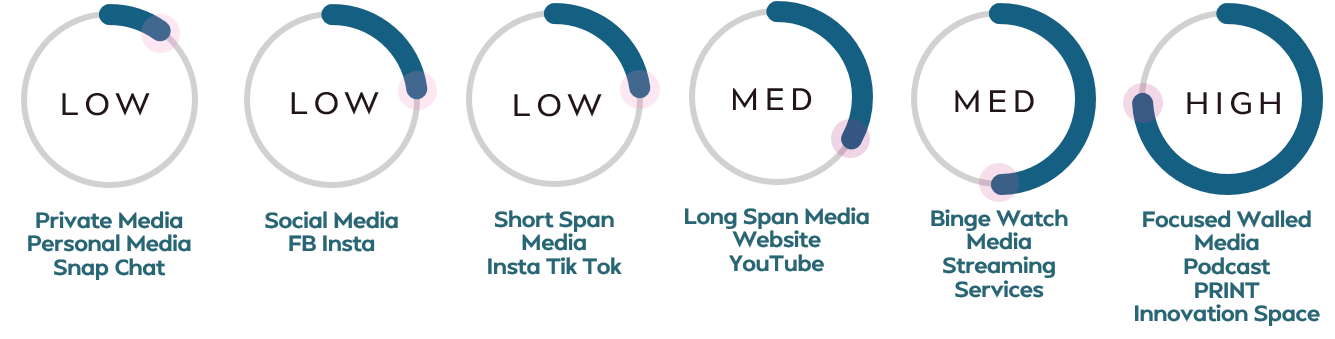
Our Approach

- Reclassify media based on match with the print magazine’s core value proposition.

  • Mere awareness and presence may not be a sufficient strategy for the long-term growth of the brand.
  • The brand’s core value proposition must not be diluted.
  • The goal should be to transfer the full brand persona and provide an immersive experience.

- Enhance the content model to accommodate adaptation for short-form media without compromising the brand's persona and equity.

  • The magazine’s editorial content has evolved to build a well-aligned user persona of a modern woman.

  •  The content plays a strategic role in expanding the magazine’s franchise and attracting a new audience through various media forms and platforms.

  •  The challenge is to generate content that creates a consistent and complete understanding of the brand in a short-span media.

  • Content strategy must include novelty, relevance, entertainment, newsworthy, true-to-persona elements.

- Understand how to deliver the “print experience” in a digital context.

PRINT

  • Tangible
  • Tactile
  • High Definition
  • Aesthetic and visually appealing
  • Immersive, Restful
  • Closed, Finite, Private
  • Gift
  • Valuable

DIGITAL

  • Ephemeral, not real
  • Instant
  • Open, Limitless
  • Flattens differentiation
  • Short attention span
  • Can promote frenzy, loss of control
  • Free
  • Addictive

- Shift the brand model to consumer engagement without diluting editorial control.

  • The need for editorial control makes it difficult to engage the audience in a way that can promote a strong relationship with the brand.
  • The brand’s value proposition has a strong potential to engage consumers at a personal level.
  • Figuring out a way to promote audience engagement without diluting editorial control could build a consumer-centered brand.
  • Consumer engagement would also lead to a high viral load, setting the brand on a growth path.

Case sTUDY.

Consumer Personas: Tailoring a Website
for Different Information Processing Segments.

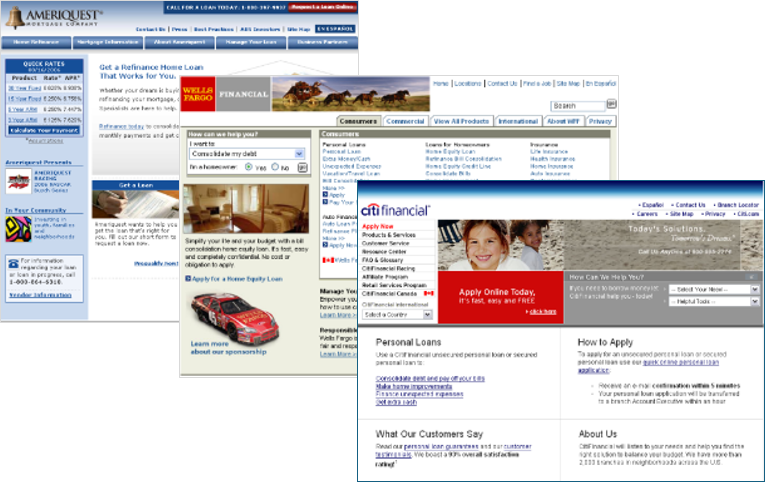
Our client site had the easiest application form but the lowest conversion rate.

There was a significant decline in brand equity ratings following consumer visits to the website.

The website was destroying brand equity. Why?

COMPETITOR SITES

Our research showed four information segments.
The client site was optimized for only one.

INEXPERIENCED
SEARCH

novoive

Novice Tony

  • Feels overwhelmed when searching on the internet
  • Lack experience to confidently search
  • He wants to be led
  • Keep process simple
  • Provide live assistance

KNOWLEDGE
SEARCH

Diligent

Diligent Annie

  • Diligent in searching for information
  • Read a lot but not satisfied with their search outcomes
  • Provide intuitive and interactive learning experience
  • Provide the structure – organize by themes
  • Provide lessons

BROWSING /
COMPARISON

Calculator

Calculator Sam

  • Not ready to buy, need more research
  • Impacted by the design and visual aspects – minimal visual clutter
  • Provide what they need – add decision tools
  • Minimum visuals, uncluttered
  • Encourage options – don’t try to sell hard

TRANSACTION
DRIVEN

Quick

Quick Wally

  • Little hesitation
  • Eager to get started
  • Have confidence while browsing
  • Know what to do
  • Provide direct path from home page to place an order
  • But don’t make it the centerpiece

RESEARCH METHOD.

How do people search for OTC products online?

Research Questions:

  • How do people search for OTC products online?
  • Which websites do they visit?
  • What are the keywords used?
  • What do they search for first (e.g., brand, ingredient, symptom, etc.)?
  • What do they search for next, and so on?
  • How often is search used vs. a filter or check box (left-hand side)
  • Which filters/checkboxes are used the most?

The scope did not include:

  • How do people learn about the products?
  • What are their motivations for purchasing such products?
  • Where do they conduct their research?
  • What is their path to purchase?
  • What is the role of the different websites visited?

Research Methodology

Respondents attended virtual labs in batches of 4-6.
Total Sample Size N=100. Lab Sessions of 75 minutes each.

Task Scenario:

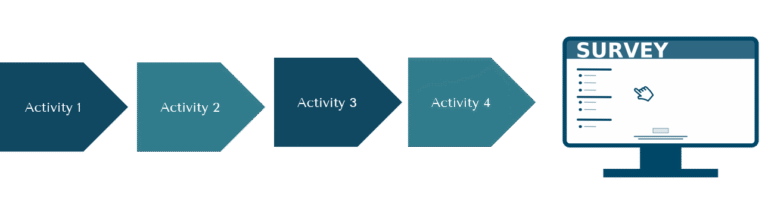
Respondents were instructed to shop online for a few everyday products, either for themselves or for their family members.  They would have four shopping tasks to complete, each lasting 10 minutes. After each shopping task, they would take a quick survey in the lab and then move to the next task.

Respondents were free to choose any site they wanted to visit.

Each task was to be completed in 10 minutes, followed by a 5-minute in-lab survey.

The in-lab survey primarily captured the sites they visited and were most likely to use, the brands considered, and the chosen ones.

NOTE: Task instructions were tailored for regular and occasional users within each OTC category, based on the respondent’s usage status. 

TOOLKIT.

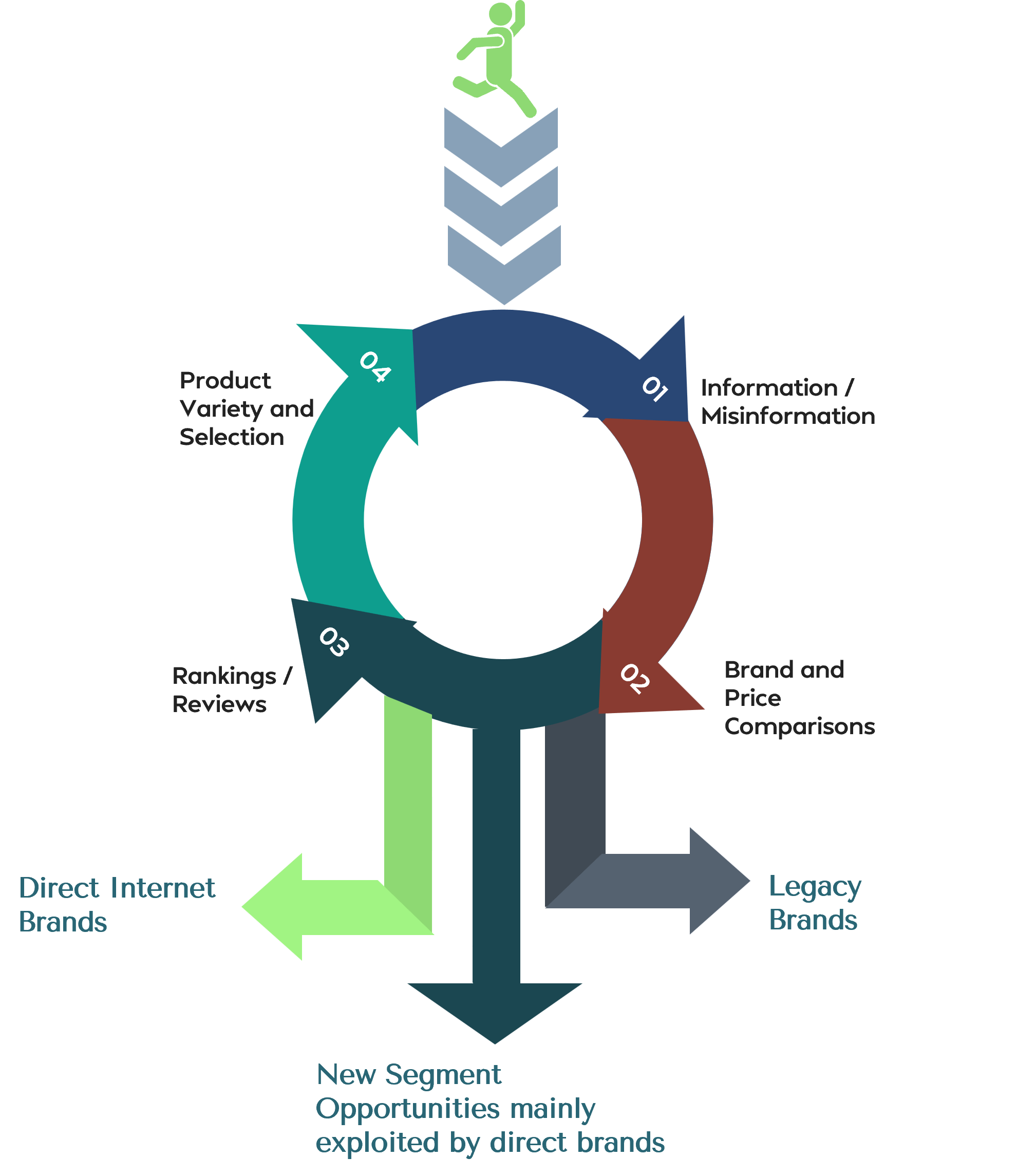
The omnichannel marketing chain is not linear.

The omnichannel marketing chain is not a series of touchpoints.  Consumers face an array of information and misinformation sites on the Internet, as well as customer reviews on sites like Amazon, which can lead to new brand learning and brand switching. Strategies to influence brand choice on the Internet must understand this eco-system.

consumer

In the Omnichannel Lab, we observe consumers interact in the Mock Retail Store and on the Web in the Group Lab. This is useful for combating misinformation and developing compelling strategies to influence consumer learning and decision-making.

Pre and post-brand ratings, consideration, and choice are used to model the impact of omnichannel learning on brand shares in the category. 


In the Omnichannel Lab, we observe consumers interact in the Mock Retail Store and on the Web in the Group Lab. This is useful for combating misinformation and developing compelling strategies to influence consumer learning and decision-making.

Pre and post-brand ratings, consideration, and choice are used to model the impact of omnichannel learning on brand shares in the category. 

Learnings inform and suggest strategies for -

Selected strategies and tactics are tested in the Lab for final validation and predictive modeling.

RESEARCH METHOD.

Understanding omnichannel consumer behavior in the lab.

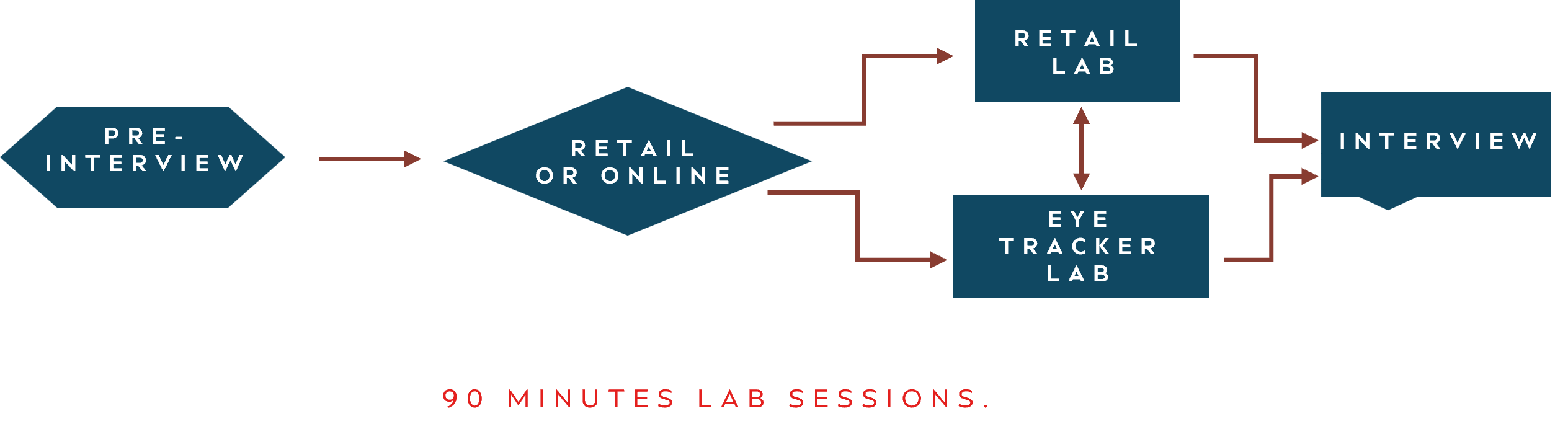
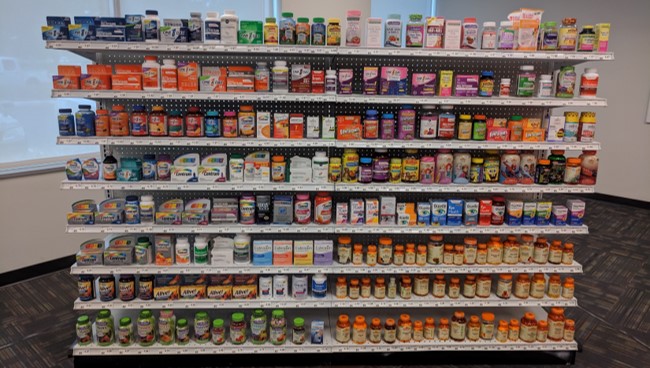
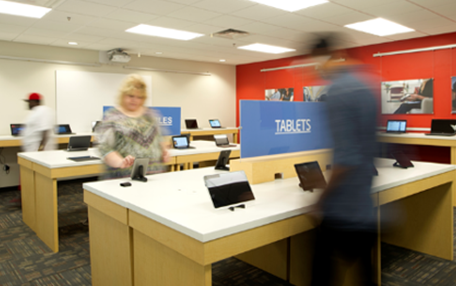
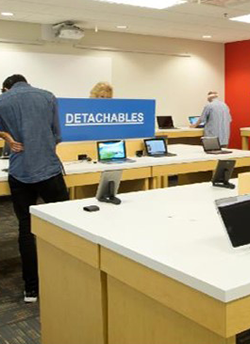
At Weblab, we take a layered approach to understanding consumer journeys across both physical and digital touchpoints. Each 90-minute session starts with a pre-interview to uncover initial expectations and habits. Participants then engage in simulated shopping experiences—either online or in our mock retail store (pictured below)—while we track real-time behaviors.

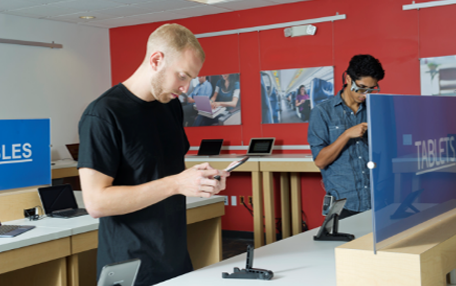
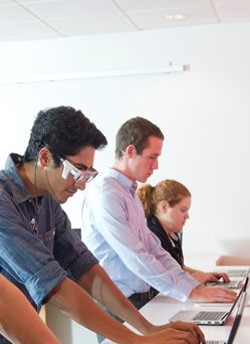
The eye tracker lab, using advanced 3D eyeglasses, captures detailed gaze patterns and attention hotspots, offering deep insight into visual engagement. Finally, a post-experience interview explores motivations, challenges, and decision-making processes.

This seamless flow—from interview to interaction to analytics—helps us deliver a holistic view of consumer behavior, blending what people say with what they actually do.

MOCK RETAIL STORE.

EYE TRACKING USING 3D EYEGLASSES.

CASE STUDY.

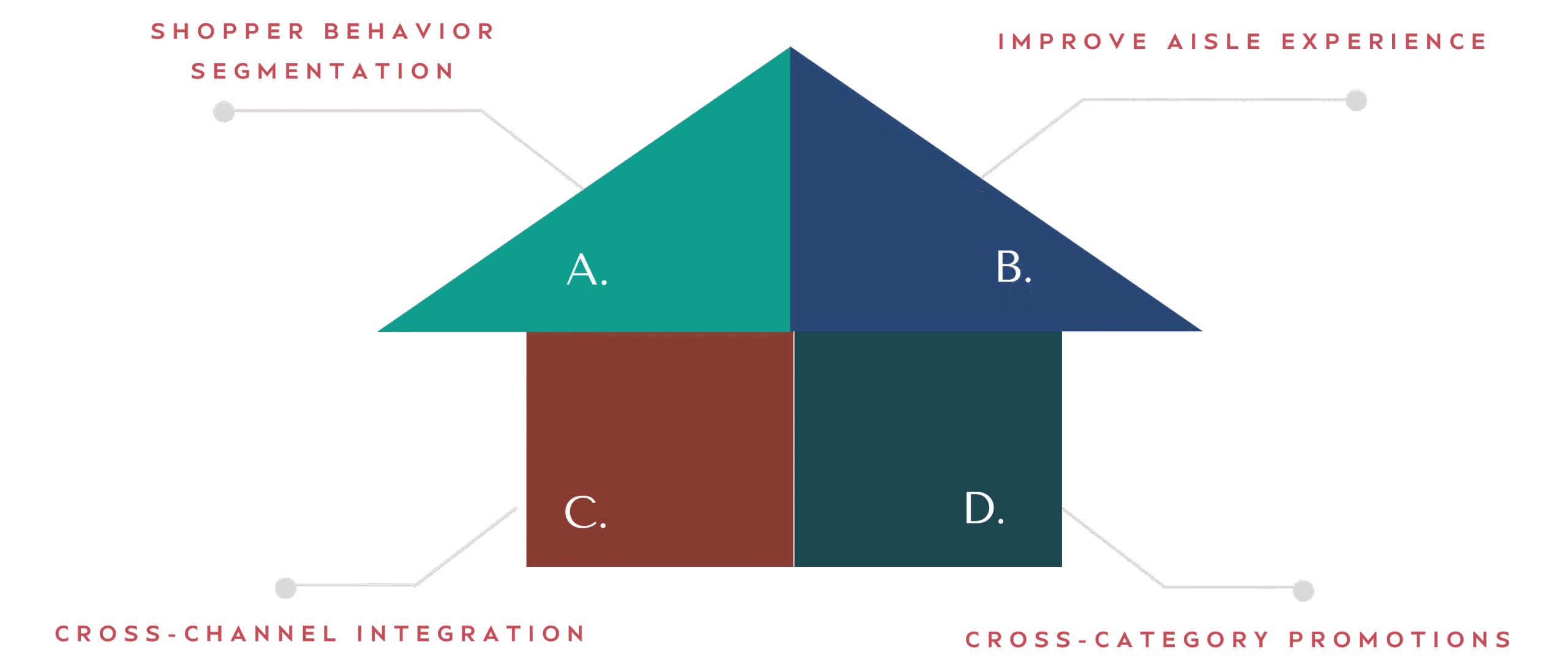
Which store arrangement leads to the highest upsell?

Pre-Test Screening & Survey

320 shoppers looking to buy a device in the next 90 days. The screener includes pre-shopping questions for pre/post comparisons.

Experimental Design

Four cells, resulting in four different physical layouts, with 80 shoppers per cell. Shoppers will only see and shop one layout.

Mock Store Shopping

Shoppers enter mock stores and shop as they normally would, choosing they device they would be most likely to purchase.

Post-Test Survey

320 shoppers go to a separate room where they take a quantitative survey covering their device choice and shopping experience.

CASE STUDY.

Which Interactive Point of Sale (POS) results in the highest sales and why?

Mock Retail Store

Two Cell Design

Without iPOS
n=75

With iPOS
n=75

All taking a pre & post survey.

Eye-Tracking Glasses

Ten shoppers wore glasses to track their in-store shopping behavior and were then debriefed by a researcher.​

  • Which iPOS content is most helpful to or needed by shoppers?
  • Do we have the right content available in the iPOS programs?
  • How can we engage shoppers with iPOS in-store?
  • Does iPOS open shoppers up to new device considerations?
  • How do different iPOS versions compare to one another?

We’d love to hear from you!

Please enter your contact details if you want to know how we can help your business through strategic research, UX/UI design, or brand innovation.

CONTACT